
LOUIS LEFEBVRE
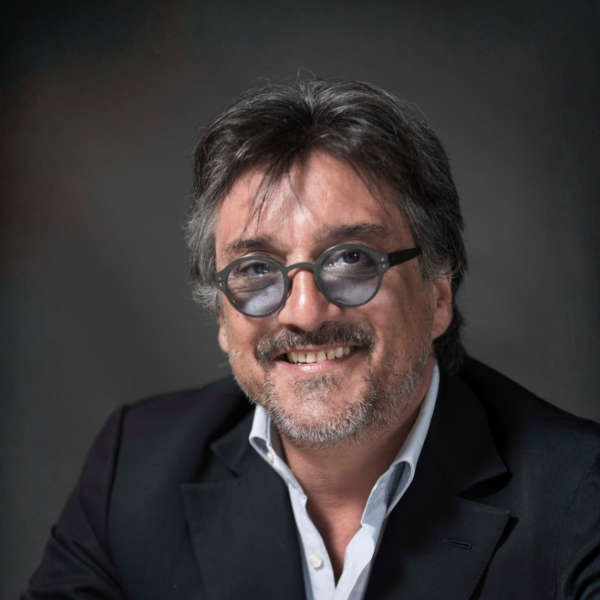
Director of Lefebvre & Fils Gallery - Paris
« Ceramics has recovered its freedom of expression »


Director of Lefebvre & Fils Gallery - Paris
« Ceramics has recovered its freedom of expression »
Founded in 1880, Lefebvre & Fils Gallery celebrates its 145th anniversary this year. Six generations have succeeded one another at the helm of this historic house, a master in the art of combining heritage and contemporaneity. Under the leadership of Louis Lefebvre, the gallery has established itself as a pioneering venue for contemporary ceramics, supporting artists and creators through a unique residency in Versailles.
François Blanc : Contemporary ceramics is experiencing unprecedented global growth today, what perspective do you take on this evolution, and which major trends or figures seem to you to mark the renewal of this medium?
Louis Lefebvre: Yes, it is undeniable growth. Ceramics is everywhere today: in major art fairs, galleries, biennales, museums. What was still considered marginal or "decorative" just twenty years ago is now at the heart of artistic discourse. But beyond fashion, there is something deeper.
This medium has become a genuine language of expression for an entire generation of artists from cultures, genders, and communities that had little visibility in the traditional spheres of art. Ceramics allows them to speak of their history, their memory, their roots. It is an art that stems from the body, from gesture, from contact with the earth, and therefore from something viscerally human.
We also observe a return to history, to origins: many artists draw from the traditions of their country, revisit ancestral forms, rituals, mythologies. This narrative and identity dimension is very strong.
And unlike other mediums, ceramics allows us to address these subjects without posture, with disarming sincerity. It is an art that remains at human scale, that speaks directly to the senses and to memory. Perhaps that is why it resonates so much today.
Lefebvre & Fils Gallery celebrates 145 years of existence this year. How can a gallery with such a heritage remain in step with its time, particularly through the lens of contemporary ceramics?
It is not so simple to remain connected to one's time when carrying such a long heritage. My initial training is rooted in the history of European ceramics from the 16th to the 18th centuries—a field I continue to love deeply. But in 2009, when my parents retired, I made a clear choice: to move toward the contemporary.
What interests me above all is dialogue with artists—understanding their ideas, their states of mind, accompanying them in creation. And then, as a frequent buyer at art fairs, I saw how absent contemporary ceramics was from the major international stages.
It was obvious: we needed to reintroduce this medium, not as a craft, but as a living field of creation. Today, my son Lucas, the sixth generation, continues this same dynamic. We continue to weave a dialogue between the old and the contemporary: we can perfectly well show a 17th-century vase alongside a sculptural work created yesterday. It is this dialogue that distinguishes us.
What explains, in your view, this renewed enthusiasm among collectors for a medium long considered as artisanal rather than artistic?
Ceramics has always had its letters of nobility. Simply, it has long been placed on the side of the decorative arts. Now, what we have been experiencing for about fifteen years is a shift: ceramics has once again become a sculptural medium of expression in its own right.
Artists find in it a freedom, an immediacy of gesture, a physicality that other mediums no longer offer. And collectors, for their part, are rediscovering a sensual and narrative dimension: the material, the firing, the trace of fire. These are works that breathe, that bear the hand of the one who made them.
The residency you created in Versailles is a unique tool in the landscape of galleries. How is this place of production and research a natural extension of a gallery's role today?
To my mind, it is self-evident. What is abnormal is that few galleries do it! If we reread the history of art, we see that in the 19th and early 20th centuries, collectors and gallerists concretely supported creation: they invited artists, financed their materials, hosted them in residence.
We do exactly that in Versailles. The gallery does not merely exhibit, it produces. It is a place of exchange, research, and experimentation, where the relationship between human and creator remains central. This accompaniment, both material and intellectual, is for us the key to strong and lasting works.
With us, everything stems from passion and emotion. We do not choose an artist based on their resume, but on what they provoke in us. What fascinates me is to propose challenges: inviting a metal sculptor or a painter to explore ceramics, leading them to confront a living, temperamental material.
We recently proposed this type of collaboration to two New York artists—one works with tires, the other with relief canvas. Having them create in ceramics is opening a new field of expression. This dialogue between techniques, cultures, and materials is at the heart of our commitment. But everything rests on a foundation: knowledge of art history. Without it, creation remains without roots.
What means do you employ to make ceramics accessible and desirable to new generations of audiences and collectors?
Our objective is clear: to make ceramics visible, comprehensible, accessible. This involves exhibitions, meetings, constant exchanges with museums and foundations. We work toward ceramics being perceived not as a niche art, but as a dialogue art, capable of touching all audiences.
What makes the difference is human contact. We encourage artists to meet the public, as Théo Ouaki did at the last Ceramic Art Fair in Paris, present at the stand every day. This proximity changes everything: collectors understand, visitors discover, institutions take interest.
Our strength is also diversity: diversity of generations, cultures, sensibilities. We love to cross perspectives. And with my son Lucas, we try to bring new energy, more transversal, which opens the gallery to other scenes.
After 145 years of history, how do you envision the evolution of Lefebvre & Fils Gallery in the years to come?
We always have several years of advance on our projects. We are currently working on a collaboration between fashion and ceramics, notably with Laurent Nicolas, who worked for twenty years at Marc Jacobs and Vuitton.
The idea is to cross disciplines, to experiment as Picasso, Miró, or Ettore Sottsass did before us with Sèvres porcelain. Combining noble materials with poor materials, playing on contrasts: this is a French tradition of experimentation.
In three or four years, a major project will see the light of day with a fashion house. It will be, I believe, a fine way to show that ceramics, after 145 years of history in our gallery, remains a medium of the future.
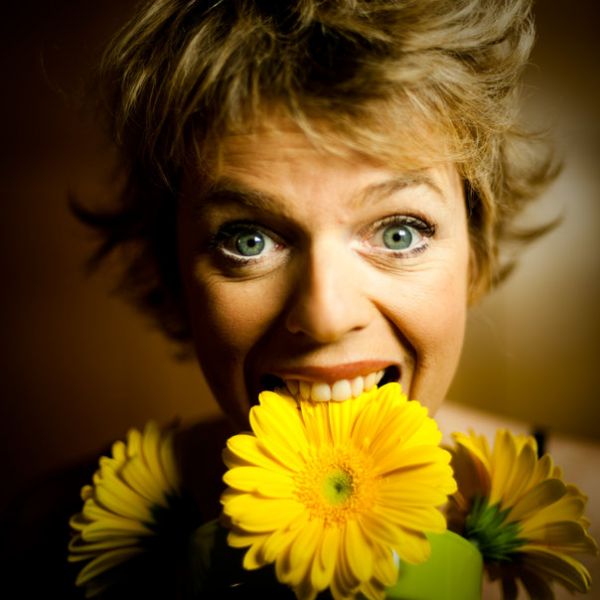
Alice Audouin
Alice Audouin Consulting s’est construit une réputation en activant des connections entre le monde de l’art et celui du développement durable. Sa fondatrice en fait bénéficier Guerlain, Paris Europlace, Ruinart, la RMN et crée de nombreux événements au croisement de l’art et du développement durable. Pour elle promouvoir un art qui intègre les enjeux du développement durable, c’est promouvoir l’art contemporain.
Quand une idée est à la mode, tout le monde s’en empare, non sans arrière-pensées. Quels sont vos conseils pour se tenir à l’écart de la double gadgétisation de l’art et du développement durable et éviter ainsi d’attirer les critiques croisées des amateurs d’art et des écologistes sincères ?
Alice Audouin : Attendons que ce soit la mode ! Pour le moment, c’est un signal faible d’une tendance de fond. Je remarque d’immenses territoires ...
Lire la suite >>>CO-FONDATRICE DE LA FONDATION FRANCES
"La radicalité de nos choix de collectionneurs fait notre visibilité"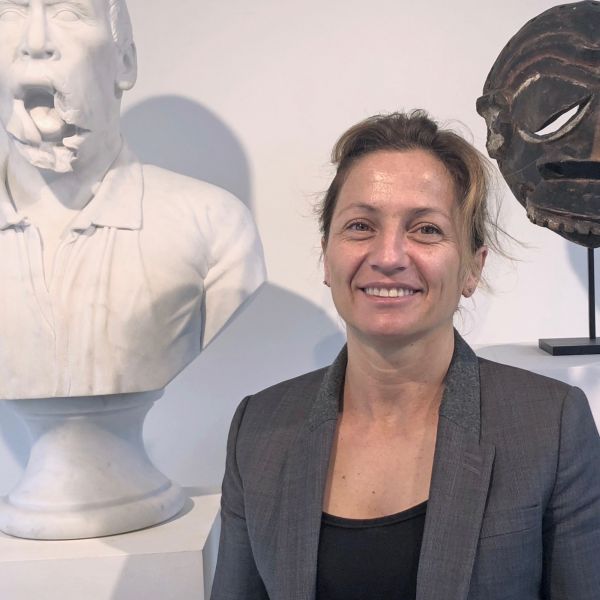
Depuis son ouverture en 2008 la Fondation d’entreprise Francès à Senlis construit une collection sur les excès de l’homme. Conçue par un couple, Estelle et Hervé Francès, la fondation d’entreprise Francès accueille jusqu’à fin décembre 2020 l’artiste français Kader Attia, lauréat du Prix Marcel Duchamp (2016) représenté par la Galleria Continua partenaire de cette exposition, intitulée “Mémoire de l’Oubli”.
Pour Le blog Art 360 by Communic’Art, la cofondatrice revient sur le pari audacieux de cette création, sa communication et son impact local.
Pour émerger parmi les innombrables fondations d’entreprise, avec des moyens relativement modestes, faut-il communiquer plus que les autres, ou radicalement différemment ?
Lire la suite >>>DIR’ COM’ DU MUSEE DE L’ELYSEE
"La photographie est partout, elle est a tous et faite par tous"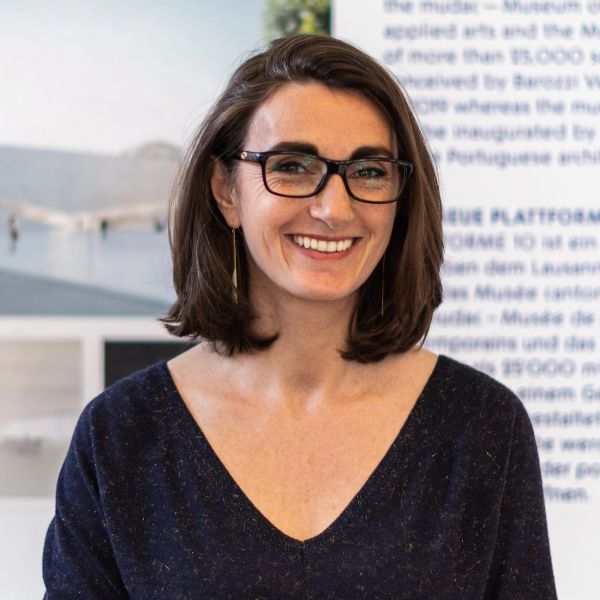
© Sebastien Nobel
Le Musée de l’Elysée de Lausanne doit s’intégrer dans le projet muséal PLATEFORME 10, vaste regroupement architectural culturel et de loisirs dont le musée sera l’un des piliers en 2021, Julie Maillard en décline la communication au présent et au futur, au singulier et au pluriel. Exercice de transition au moment où le Musée se réinvente
Comment avez-vous conçu la communication sur l’évolution des missions du Musée de l’Elysée (collection et expositions… ), mais aussi sur son implantation au sein d’une « Plateforme » culturelle ?
Lire la suite >>>Danseuse et chorégraphe de danse contemporaine
"Faire que la maison de toutes les danses soit celle de tous les publics!"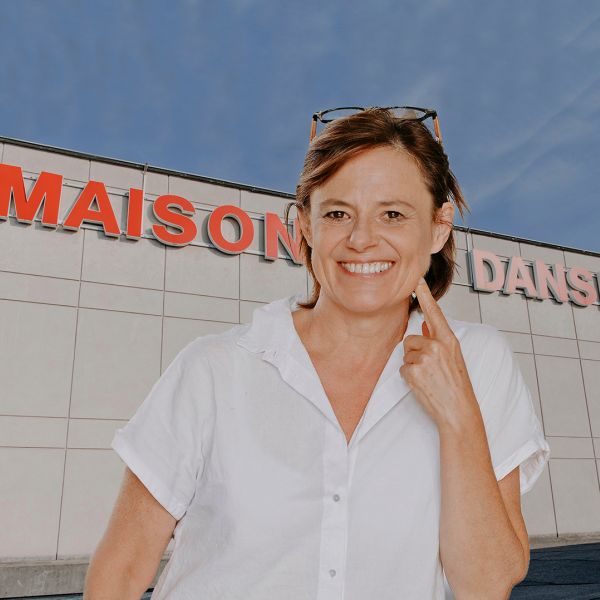
© Blandine Soulage
Danseuse et chorégraphe, Dominique Hervieu fait corps, avec la même passion, avec ses fonctions de directrice de la maison de la Danse. Jusqu’au détail des questions de billeterie, rien ne lui échappe. La communication n’est pas un gros mot pour celle qui s’est fixé le défi de faire découvrir toutes les danses à tous les publics.
En prenant à Lyon les commandes de la Maison de la Danse, en 2011, vous affichiez l’ambition de désenclaver cette discipline, à tous les sens du terme. Quels critères permettent de mesurer les progrès accomplis ?
Dominique Hervieu : Pour une institution culturelle soumise à une éthique de service public, comme pour un artiste qui souhaite partager sa sensibilité, mieux vaut savoir à qui l’on s’adresse.
Lire la suite >>> Restitution des œuvres d’art : « Il est urgent de réinventer une nouvelle forme de gouvernance culturelle »
Par FRANÇOIS BLANC
Toutes ses contributions >>>
"Bien communiquer est un art à forte valeur ajoutée"
Par FRANÇOIS BLANC
Toutes ses contributions >>>

