
News
Alongside the exhibition dedicated to Kiki Smith, MO.CO. Panacée presents “À fleur de peau”, a collection exhibition on monstrosity
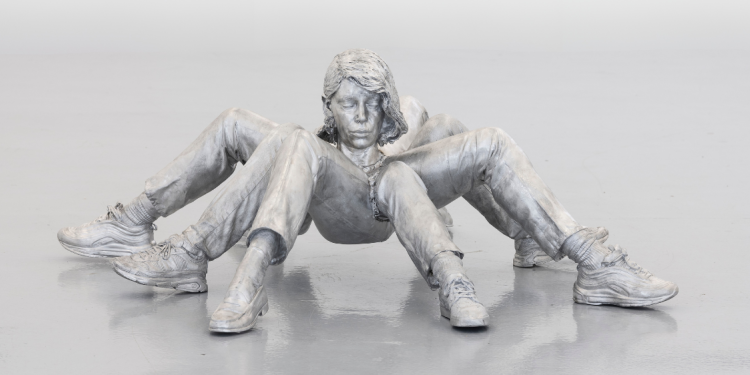
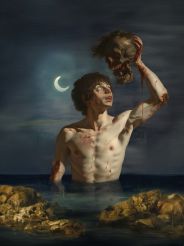
This summer, MO.CO. Panacée is hosting a group exhibition exploring monstrosity, and monstrous and mutant forms in contemporary art. As Antonio Gramsci once said, we live in an age of monsters. Gramsci was perhaps referring to the “interregnum,” a liminal legal and political moment in which legality is suspended and which, in his case, preceded the rise of fascism in the 20th century. Our present day does not seem immune to what can only be described as monstrous, without necessarily being able to define it more precisely. According to teratologist Jeffrey Jerome Cohen, the monster represents everything a society seeks to reject. It is an error, a difference, a deviation, an excess.
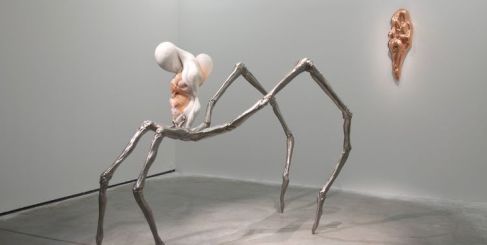
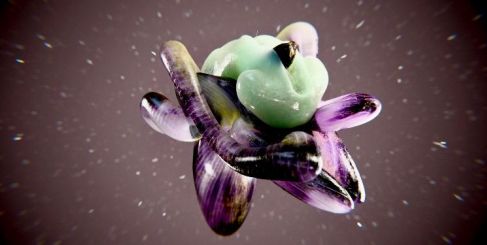
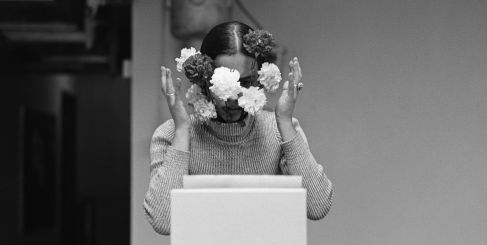
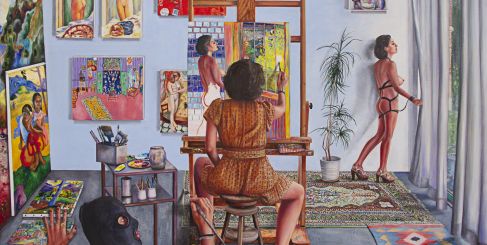
While these terms initially referred to monstrosity as a biological developmental anomaly within a scientific and medical framework, they now extend to the notion of the social monster: a being, an idea, reflecting the current state of a society and its imagination. Through nearly eighty works by around twenty artists, dating from the 1970s to the present day, À fleur de peau does not aim to diagnose monstrosity, but instead dives into Pandora’s box to reveal that the monstrous is often not as distant as we might think. It exists on both sides of the epidermis.
Closely related to the abject, the monstrous disrupts identity, systems, and established order. It respects no boundaries, positions, or norms. What best characterizes it is perhaps its visceral nature, requiring a body to inhabit, to give it form, and a skin to contain it — an envelope that nonetheless risks letting its contents overflow or escape. It would be easy to attribute monstrosity to external forces, but it can also be chosen, embraced as a sign of resistance against the status quo, drawing its power from otherness. As writer Charlie Fox puts it: “Monsters cause trouble, they disrupt definitions, they upend what we think we mean. All of this is brave and wild, not to mention the job of art.” Whether linked to gender, race, or socio-medical (dis)ability, the “monstrous condition” might perhaps be celebrated rather than feared, as it challenges our ways of seeing these categories.
One of the starting points of the exhibition is the following reflection: if we grow up with monsters from early childhood — through fairy tales, nightmares, the entertainment industry, and toys — why and how do they change form and follow us throughout our lives? How does monstrosity reveal social injustices and imbalances? Taking this reasoning to its logical conclusion, how should we approach monstrosity today? At the same time, could “monstrosity” be the field in which culture feels most at ease? Rather than giving monstrosity a fixed form, À fleur de peau borrows from artist Mike Kelley’s definition of the unheimlich, suggesting that it lies in monstrosity as both quality and feeling.
Surface, interface, membrane: skin is often the medium through which trauma is expressed, as in the drawings and engravings of Stéphane Mandelbaum; the ambiguity of a body in becoming, like the baroque sculptures of Mónica Mays whose threat of deformation is always present; or the lingering unease that resurfaces at night, confronted by the velvety guardians of Julian Farade. It becomes obsessive, as seen in the decapitated dolls of Penny Goring; the muscular bodies drawn from pop culture, serial killers’ narratives, and classical statuary in the video-collages of Richard Hawkins; or the seriality of awkward and grotesque forms dear to Augustin Katz. In the 1970s, psychoanalyst Didier Anzieu spoke of the “skin ego”: skin as a psychic function, one membrane among others, creating necessary barriers and limits to soothe excessive emotional states. Yet À fleur de peau shows us that the porosity between different forms of the “monstrous condition” is precisely what continues to unsettle us.
In an immersive and labyrinthine scenography, À fleur de peau engages with the unconscious of our fears and desires. The exhibition is another opportunity for MO.CO. to affirm its support for artists by producing new works, particularly by recent graduates of MO.CO. Esba in Montpellier, Nuria Mokhtar and Arthur Monteillet, as well as ambitious adaptations of existing works in the case of Dorota Gawęda and Eglė Kulbokaitė. Some artists will be shown for the first time in a French institution, including Sue Coe, Keunmin Lee, Dorota Gawęda and Eglė Kulbokaitė, Brilant Milazimi, Sibylle Ruppert, and Michelle Uckotter.
Curatorship: Anya Harrison, with Alexis Loisel-Montambaux, exhibition assistant
Artists: Albrecht Becker, Kévin Blinderman, Julien Ceccaldi, Sue Coe, Julian Farade, Dorota Gawęda and Eglė Kulbokaitė, Penny Goring, Tirdad Hashemi, Richard Hawkins, Augustin Katz, Keunmin Lee, Tala Madani, Stéphane Mandelbaum, Mónica Mays, Brilant Milazimi, Nuria Mokhtar, Arthur Monteillet, Moor Mother with Glenn Espinosa and Cauleen Smith, Ulrike Ottinger, Lili Reynaud Dewar, James Richards and Steve Reinke, Sibylle Ruppert, Ebun Sodipo, Ceija Stojka, Michelle Uckotter, Jenkin van Zyl, and Issy Wood.
The exhibition is supported by Fluxus Art Projects.
MO.CO.