
News
The craftsmanship of Atelier Boulnois, a key asset in the reconstruction of Louis XVI’s bed at the Château de Versailles

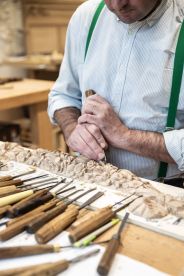
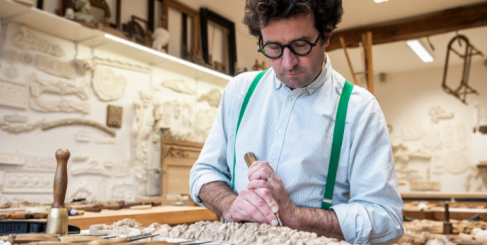
On the occasion of the official presentation on April 13, 2026, of the reconstruction of Louis XVI’s bed, the Château de Versailles unveils an exceptional project at the crossroads of historical research and artisanal excellence. In collaboration with François Gilles and Julien Villeneuve, Atelier Boulnois worked closely with the curators of the Château de Versailles to bring this bed back to life as part of the restoration of the King’s private apartment bedroom.
Of this royal bed, destroyed during the French Revolution and once a central element of the sovereign’s daily life, only one precious source remains today: the memorandum written in 1775 by Pierre-Edme Babel, which precisely describes its sculpted ornaments and exact dimensions.
It is within this absence of the material object that the reconstruction takes shape.
This bed, in which Louis XVI slept from 1775 to 1789, offers a unique insight into the king’s private life within his inner apartment. The room will be open to the public from spring 2026, both through self-guided and guided visits: a rare opportunity to discover the outcome of a comprehensive restoration project of the space initiated forty years ago by the Château de Versailles.
Based on in-depth research and interpretative work, the project proves highly complex: restoring not only a form, but also an ornamental language, an intention, and the spirit of the 18th century. Drawing from the 1775 memorandum, the artisans reconstituted a richly detailed sculptural vocabulary, where each element — scroll, leaf, or flower — contributes to the overall composition. The gilding, executed with gold leaf, was specifically entrusted to the restoration workshops of the Château, highlighting the importance of the project for the Versailles public institution. A total of 1,625 gold leaves cover the bed and its carvings.
Between scientific rigor and the sensitivity of craftsmanship, the reconstruction becomes a true act of creation: understanding, interpreting, and transmitting without betraying or freezing. It establishes a constant dialogue between past and present, between what is documented and what must be reimagined.