
Actualité
At 46 St Paul Gallery, “Jean-Paul Agosti, Jardin miroir”, a retrospective between nature, science, and perception

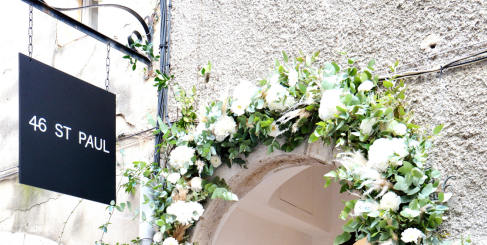
46 St Paul Gallery presents a retrospective dedicated to Jean-Paul Agosti, a singular figure of contemporary French painting, whose work has explored for more than fifty years the correspondences between nature, science, and spirituality.
Born in Paris in 1948 into an Italian family deeply rooted in the art world, and the son of photographer and gallerist Paul Facchetti, Jean-Paul Agosti grew up in contact with the artistic and intellectual avant-gardes of his time, including Max Ernst, Alberto Giacometti, Jean Dubuffet, Henri Michaux, psychoanalyst Jacques Lacan, and architect Carlo Scarpa. Trained at the École nationale supérieure des Beaux-Arts in Paris and enriched by studies in philosophy of science at the Sorbonne, he very early developed a rigorous and structured artistic thinking.
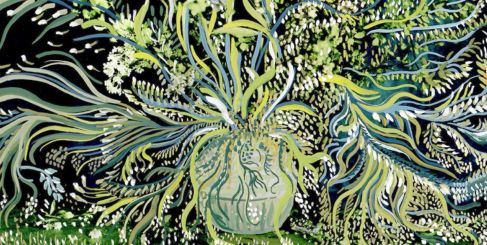
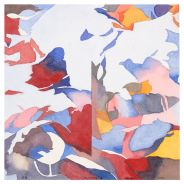
From the 1970s onward, Agosti fully embraced painting. Living within the grounds of a former abbey in Gif-sur-Yvette, he began painting the surrounding garden — a foundational motif in his work. The garden becomes for him a symbolic territory: a living architectural space where order and abundance, structure and chaos, visible and invisible intertwine. Through watercolor in particular, he develops a vision in which multiple layers of reality coexist, inviting the viewer’s gaze to circulate and penetrate the depth of the world.
A decisive encounter with mathematician Benoît Mandelbrot in 1978 marked a turning point. Fractal theory intuitively confirmed what his painting had already sensed: an arborescent structure of reality, breaking with Euclidean seriality and opening onto a hyperbolic space where forms unfold across different scales. Agosti then developed a practice based on mise en abyme, shifting viewpoints, and variations of scale.
The figure of the Tree — both structure, symbol, and organizing principle — becomes omnipresent. In this universe, the image is simultaneously architecture and growth, memory and becoming. A baroque tension runs through his work: to order primordial chaos, to reveal the hidden coherence of the world.
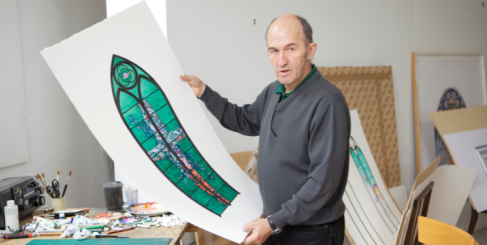
This reflection led him to expand his practice toward architecture, landscape design, and stained glass art. In collaboration with the Simon Marq workshop, he has recently completed major monumental works, including the twenty-one stained glass windows of the chapel of the Saint-Joseph college in Reims, as well as several projects for buildings in France and abroad.
Recipient of the International Contemporary Art Prize of Monaco in 1987 and appointed Chevalier of the Ordre des Arts et des Lettres in 2019, Jean-Paul Agosti continues his work today from his studio in Joigny, in the Yonne region.
This retrospective offers a journey through the key stages of his research: from early garden studies to fractal constructions, from works on paper to monumental installations. It reveals the profound coherence of a practice that, beyond techniques and formats, continually questions our ways of inhabiting space and perceiving the world.
46 St Paul Gallery