@JERRYGOGOSIAN

INSTAGRAM CREATOR
"I had allowed a pile of dollars to dictate how I felt about art"


INSTAGRAM CREATOR
"I had allowed a pile of dollars to dictate how I felt about art"
Long before the coronavirus crisis, the Instagram account @jerrygogosian had established itself as an oracle of the contemporary art world. Its creator, Hilde Lynn Helphenstein—better known as Jerry Gogosian, who was found dead in a São Paulo hotel room on May 31, 2026—built a devoted following through her biting observations of the art market.
Through a stream of memes—ordinary images paired with wickedly ironic captions—the self-described former Los Angeles gallerist attracted an audience of 68,000 followers and gained direct access to many of the art world's leading figures, whom she interviewed on her podcast.
With her trademark sharp wit, she argued that the pandemic merely accelerated existing trends. She expected no meaningful reckoning from either mega-galleries or the art fair system.
Yet her sarcasm also challenged the art world to move beyond formulaic communications and return to what matters most: connecting people with works of art.
ART360: With your very particular sense of humor, how would you describe this period?
Jerry Gogosian: What's giving me life right now is watching major galleries, auction houses, and institutions have absolutely NO IDEA what they're doing — just throwing spaghetti at the wall on social media to see what sticks.
It's so bizarre, almost jaw-dropping, to watch ultra-serious institutions try their hand at humor. "Hey guys, my favorite music is rock!" It's mostly flippant, tone-deaf, or improvised — sometimes even trying too hard — but it always feels so forced that it makes my skin crawl. Like watching your parents make out.
ART360: Do you think the pandemic is conducive to introspection and self-deprecation?
Jerry Gogosian: I'll be honest — I'm thinking about myself even more than usual right now, which is saying something because I'm already pretty self-absorbed by nature. Some days I think I should step away from the art world entirely and disappear into some small town to rediscover what art actually means to me.
I've had to come to terms with the fact that I let money corrupt something sacred in me — the value I placed on art. I always joked about it, but on closer reflection, I realized I was losing faith and letting dollar signs dictate how I felt about work.
I was starting to tolerate groupthink and other bad behavior, all in the name of ART.
I needed people smarter and more sensitive than me to set me straight. Two people in particular saved me this week: Sarah Hoover from Gagosian and art critic Jerry Saltz.
I recorded a podcast today — link in my Instagram bio — and it was genuinely humbling. Jerry Saltz asked me, "What are you afraid of?" I told him, "I'm afraid of being broken." And he said, "You are broken. So what are you going to do about it?" That hit hard. Quite a challenge to sit with.
ART360: Would you recommend that kind of self-deprecating approach to a mega-gallerist you know well — Larry Gagosian?
Jerry Gogosian: You mean my "father"? My "father" is a classic alpha male, not exactly known for his sense of humor. He makes money, he's a man of few words, and comedy is not his thing. From where he sits, there's never much to laugh about.
At that level, you can't afford to appear uncertain — if you do, the whole market starts to shake.
My "father" maintains the appearance of total confidence because a lot of wealthy people are counting on him to guarantee the value of their collections. Put simply: humor is for the poor, while the rich take their money to the bank.
ART360: Is it appropriate to use humor to get through this crisis? Is it hard to be funny when people are dying and losing their jobs?
Jerry Gogosian: Tragedy and comedy are two sides of the same coin, so yes, I keep laughing. But there's truth to the saying "comedy is tragedy plus time" — sometimes I'm too close to it all to find anything funny, so I cry instead.
That said, the art world's response to the crisis is, predictably, pretty funny — because it's so completely off the mark.
Online "viewing rooms." Please. Virtual museum tours. Oh, come on. Tiny donations to organizations outside the art world.
Flash sales: sources tell me people are quietly dumping blue-chip works at outrageous discounts out of sheer panic. That, my friend, is not a good sign.
Racing to the lowest common denominator: Art Basel's Instagram was posting a neon "P.S. I Love You" sign just as the pandemic was hitting. As if people in the middle of one of the darkest moments of their lives needed a trade fair reminding them to think about it. Hello?! The timing was miserable — borderline offensive.
Performative solidarity: major museums and institutions posting internet memes right after laying off their art handlers.
Panicked sales directors offering inappropriate discounts, with more market manipulation likely lurking beneath the surface.
And plenty of earnest, condescending social media lectures about how we need to protect the environment — delivered by NetJets' most loyal clients. You get the picture. There's plenty of material right now, don't you think?
ART360: Do you think the art world is ready to reinvent itself?
Jerry Gogosian: I'd love to be optimistic about the relationship between capitalism and art, but my gut says the art world is going to get a lot more intense and even more aggressive for those who were clinging to the old models. There will be people who break or fall apart — and those are the ones I have the most hope for.
They'll have the chance to rebuild however they choose. There's so much freedom in something dying, ending, shattering, dissolving. You can start over and find your way toward something that actually fits who you are. People complain about all the uncertainty right now, but nothing was working two months ago either.
We shouldn't be trying to put things back the way they were. It needed to blow up. I've always valued these kinds of resets when they've happened in my personal life, and I welcome them when they happen at a broader societal level too.
We're at the beginning of something new. The prospect of being part of whatever comes next energizes me. I'm genuinely excited.
ART360: Last question: in times like these, is contemporary art necessary for understanding the world?
Jerry Gogosian: Life without art would be unbearable. It would be like a meal with no flavor, or sex with no climax. A day with no weather, a year with no seasons — what would be the point?
Art marks time. It gives us space to think and to feel. It's the thing that makes life feel bigger than it is. Honestly, your question barely makes sense to me.
Unless you're talking about trophies — those certified prestige objects people need to prove they have impeccable taste. But that's a personal choice — vanity will be hard to stamp out, even COVID-19 won't manage that.
That said, if you don't happen to have a Picasso hanging in your living room, here's an exciting idea: treat every object in your home as a genuine work of art and completely reimagine your space. Curate an entire exhibition and give your friends a private tour over Zoom. Re-contextualize your whole life with art at the center, just for the fun of it.
Better yet, let your kids curate an entire room or wall using your most cherished objects. You might learn something about yourself — and that would be a pretty clever way to make the most of quarantine.
Comment la Galerie Templon s’est-elle adaptée à cette période de confinement ?
Daniel Templon : Nous avons dû fermer nos espaces au public mais notre équipe est toujours mobilisée et l’activité de la galerie se maintient, essentiellement grâce au télétravail, à la fois à Paris et à Bruxelles. Pour contrer la fermeture précoce de nos expositions, nous avons lancé un site de visite virtuelle sur internet. Le public peut ainsi découvrir nos expositions de Norbert Bisky, Billie Zangewa et Jim Dine dans des conditions radicalement différentes, presque immersives, avec des images de très bonnes qualité, des vues de l’espace et des vidéos. Il suffit d’un clic pour découvrir tous les détails d’un tableau.
Quelle a été la réaction des collectionneurs et des amis de la Galerie Templon ?
Lire la suite >>>
AU TEMPS DU CORONAVIRUS, COMMUNIC'ART DONNE LA PAROLE À SES CLIENTS.
En cette période de confinement, quelles sont les actions que vous menez avec votre équipe pour poursuivre vos activités ?
Christian Berst : Nous travaillons à l’après, car il est vital de se projeter, d’anticiper. C’est l’occasion de préparer certaines actions de promotion de nos artistes que nous nous promettions de développer depuis trop longtemps. Cela passe aussi par la mise en ligne d’un nouveau site web, la refonte de notre identité et de nos publications…
En quoi est-ce important pour la Galerie Christian Berst de maintenir le lien avec votre communauté de collectionneurs d’Art brut et vos publics ?
CB : Comme les vestales, nous devons entretenir la flamme. Ce qui avait du sens dans nos interactions sociales ...
Lire la suite >>>Après sept années chez Baccarat et deux ans à la Cité de la Céramique de Sèvres, Fabien Vallérian a pris en charge la communication internationale d’une autre très ancienne maison, Ruinart. En 2029, la fameuse Maison de champagne célèbrera ses 300 ans. Un anniversaire qui se prépare, dans le respect de la loi Évin, bien sûr, et dans la continuité d’une communication internationale liée à l’art contemporain, évidemment.
Quelle communication liée à l’art préparez-vous pour les 300 ans de la Maison ?
Lire la suite >>>ME JEAN-JACQUES NEUER, AVOCAT
"L’opinion nourrit des fantasmes sur le marché de l’art. Les magistrats aussi"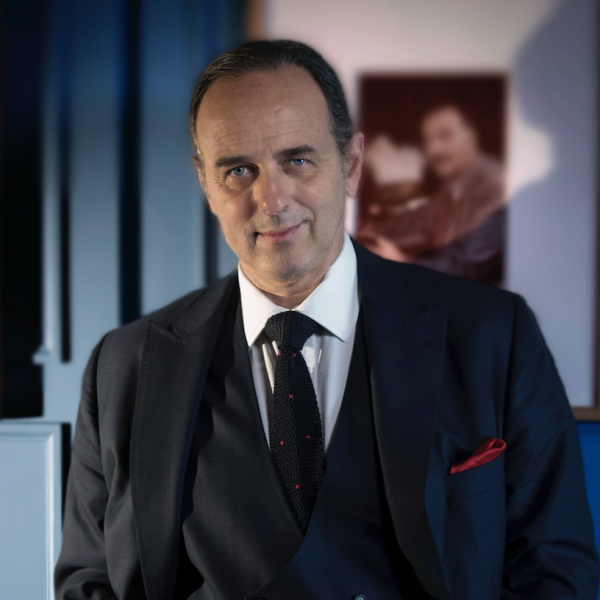
Pour Me Jean-Jacques Neuer, avocat spécialisé dans les contentieux liés au marché de l’art, la communication est un mal nécessaire. À partir du litige qui opposait la Picasso administration aux époux Le Guennec, décryptage d’une stratégie judiciaire.
Dans l’affaire de recel d’œuvres d’art, où vous défendiez la Picasso administration contre les époux Le Guennec, qui prétendaient avoir reçu de Picasso un don de 271 œuvres, pourquoi avez-vous dénoncé ceux qui en avaient fait « une histoire de lutte des classes » ?
Jean-Jacques Neuer : La France a une fragilité en ce qu’elle a un rapport ambigu à l’argent. Pour s’assurer de la sympathie de l’opinion, la partie adverse avait d’emblée pris cet angle de communication : je défendais la plus puissante succession d’artiste contre un modeste électricien !
Lire la suite >>> Restitution des œuvres d’art : « Il est urgent de réinventer une nouvelle forme de gouvernance culturelle »
Par FRANÇOIS BLANC
Toutes ses contributions >>>
"Bien communiquer est un art à forte valeur ajoutée"
Par FRANÇOIS BLANC
Toutes ses contributions >>>